
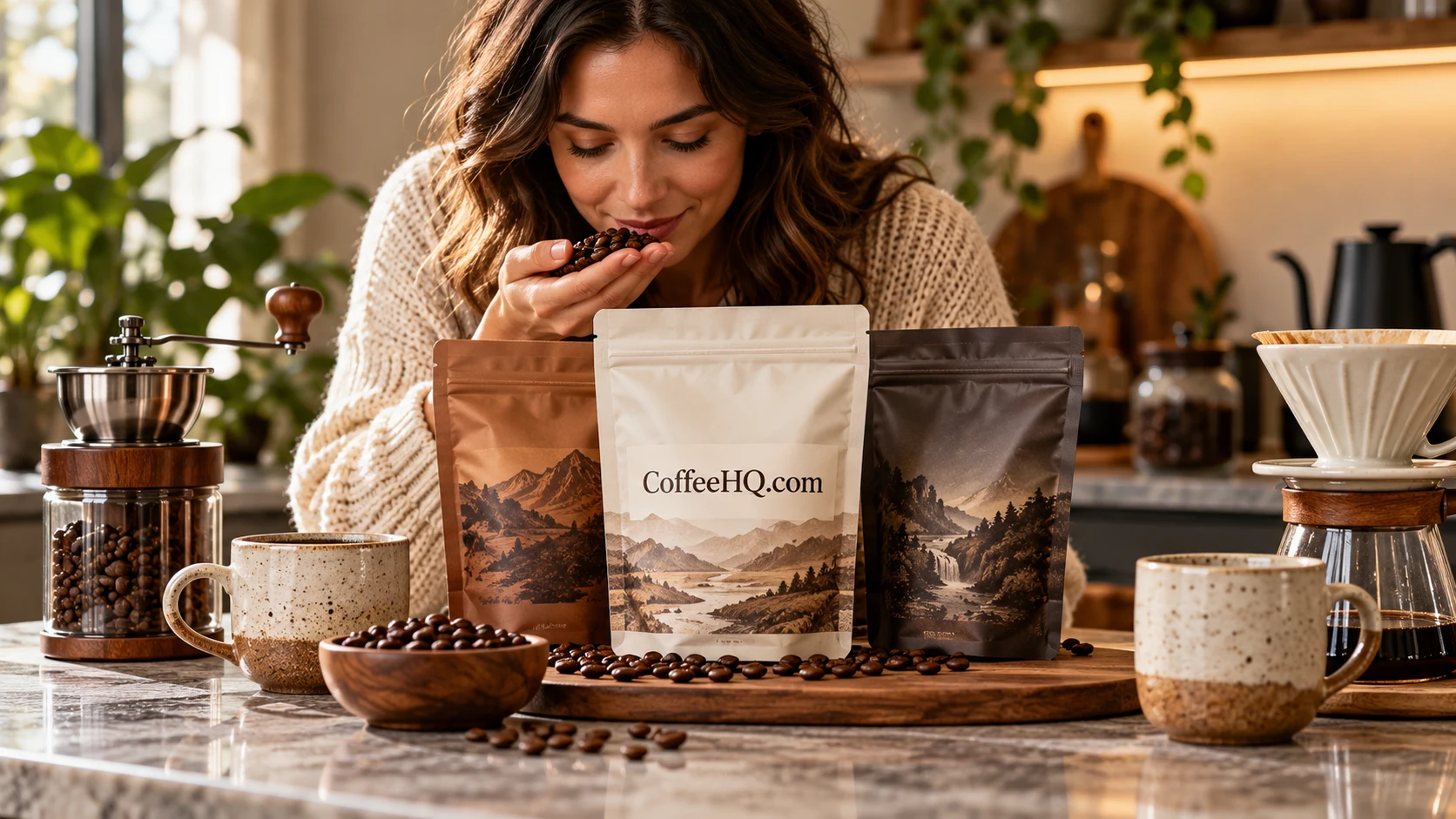
A coffee subscription has a simple job: put the right coffee in someone's kitchen before the current bag runs out. Discovery makes the offer interesting, but a useful club also helps members repeat a choice they liked. CoffeeHQ.com could become the home for that combination, with an approachable tasting guide, a rotating set of independent roasters and straightforward replenishment. This is an illustrative business concept for a future buyer of the domain.
I'd begin with people who already brew at home and want a little help choosing. A first version might serve filter-coffee drinkers in one shipping region, offering whole bean and a few clearly defined grind options. That is a manageable promise. Trying to serve espresso enthusiasts, gift buyers, offices and every international destination at launch creates a much harder fulfillment problem before the basic offer has earned a second order.
Make the first choice easy
The onboarding should ask questions a person can answer without a coffee vocabulary lesson. What equipment do you use? Do you usually add milk? Which familiar flavors do you enjoy? How often do you brew? Let members choose a comfort level for trying something different. A person who enjoys a chocolate-like, full-bodied coffee should not have to identify a processing method to receive a sensible first bag.
The first offer could be a choice between a dependable everyday selection and a more adventurous rotating selection. Keep a path back to a previous favorite while stock lasts. Tell customers what happens when that coffee is unavailable. A roaster's closest alternative, described plainly, is more useful than silently substituting a bag that tastes completely different. A clear substitution policy belongs on the product page and in the member account.
The Specialty Coffee Association's standards library gives professional operators a reference for shared quality and equipment terminology. The club's consumer interface should translate specialist information into practical choices. A tasting note can describe what the roaster perceives without promising that every member will taste the same thing in a different brewer and water supply.
Build a small, dependable supplier roster
Select a few roasters that can meet the intended dispatch schedule and supply accurate product details. Agree on bag sizes, lead times, roast-date communication, packaging, damaged-order handling and who answers customer questions. Decide whether each roaster ships directly or whether a central operation consolidates orders. Direct shipping reduces one handling step, while consolidation can simplify a multi-roaster delivery. Each approach needs its own cost and service model.
Request sample orders through the same process a member will use. Review the actual shipping notification, tracking, bag labeling and arrival condition. The coffee may be excellent while the order experience is confusing. Fixing those details with a small roster is easier than resolving them across dozens of suppliers. Keep records of the commitments that affect customers, especially holiday cutoffs and temporary stock shortages.
Treat delivery frequency as part of the product
An illustrative member uses 18 grams for one daily brew. Over 14 days that is 252 grams, before allowing for guests or dialing in a grinder. A 250-gram bag every two weeks might therefore leave very little margin. This arithmetic is a planning example, not a recommended brewing dose. The member should be able to adjust quantity and frequency independently after observing actual use.
Offer an obvious skip and pause control. Send a useful reminder before a renewal, with the dispatch date and a direct route to change it. State whether changing the next shipment also changes future shipments. These small decisions affect the everyday experience more than a long tasting quiz. They also give the operator a cleaner picture of whether a customer is leaving because of taste, excess stock, travel or price.
The National Coffee Association's coffee storage guidance is a helpful companion for members who are building a routine. Link practical guidance in the account area rather than surrounding every order with a sales message. The club can help customers handle the product they already paid for and learn from their own preferences.
Find the first members through useful partnerships
A credible early distribution route is a small group of participating roasters and brewing educators. Give each partner a clear explanation of the club, a sample customer journey and an agreed referral arrangement if one is used. Publish specific brewing and buying guides that answer questions from the onboarding flow. Measure which introductions produce customers who reorder, rather than judging every channel by initial clicks.
A first trial could invite a limited research group to receive two shipments, then ask what they finished, what they saved and what they changed. Record support time and packaging problems alongside taste feedback. This is a proposed test design, not a claim about an existing CoffeeHQ.com membership. The useful result would be a clearer offer and a realistic estimate of the work required to fulfill it.
Check the economics before expanding
Build a contribution calculation for each order: revenue less coffee, packaging, fulfillment, shipping support, transaction costs and any referral cost. Track refunds and reshipments. A subscription can look healthy before the operator accounts for customer service or a costly delivery region. Use actual supplier quotations and trial orders, then test how the calculation changes when a customer skips a shipment or orders only one bag.
CoffeeHQ.com fits a club that intends to become a trusted destination across multiple roasters. The name can carry discovery, repeat purchasing and useful education under one brand. The next step is to write a one-page offer, confirm supplier responsibilities and test a real delivery cycle. A buyer interested in acquiring the domain can request pricing and describe the club they want to build.