
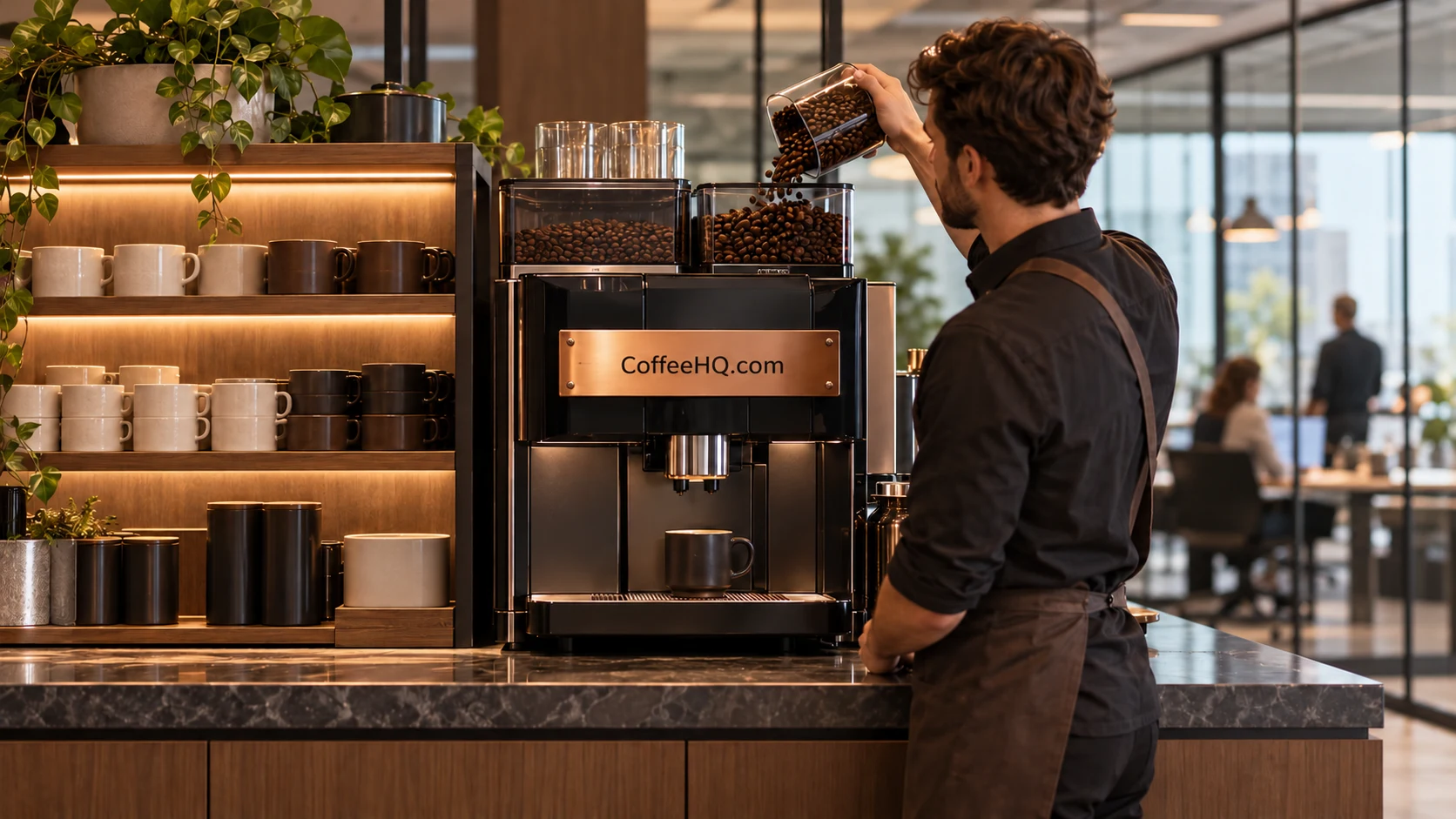
An office manager may be responsible for coffee without having time to become a coffee equipment specialist. The questions arrive anyway: which beans work with this machine, why did the milk system stop, who orders filters and what happens when the usual contact is away? CoffeeHQ.com could support a workplace purchasing platform built around those practical decisions. This is an illustrative concept for a future domain owner, rather than an existing service.
The first customer should be specific. A small business with one shared kitchen has different needs from a facilities team managing several buildings. I'd start with a single location type and a clear operating region. That makes supplier coverage, installation expectations and support responsibilities easier to explain. The initial product can be useful without listing every possible machine or claiming nationwide service.
Start with an equipment record
Every customer account should identify the installed machine, its exact model, the relevant consumables and the person responsible for it. Record whether the equipment is owned, leased or included in a supplier agreement. Include the manual and the service contact. A purchasing suggestion that ignores the installed equipment may create a cupboard full of incompatible products instead of solving a problem.
Maintenance needs are model specific. For example, JURA's maintenance guidance describes integrated rinsing and cleaning programs for its automatic machines. A platform should point users to the applicable manufacturer's instructions, not publish one universal cleaning schedule for every device. The office needs to know who follows those instructions and who arranges a technician when necessary.
A short intake can collect the number of people usually present, busiest periods, drinks offered, available space and current pain points. Ask about actual attendance rather than total payroll. Hybrid schedules can make a weekly average misleading when the same few days carry most of the demand. A supplier should be able to review the busiest day as well as the typical day before recommending capacity.
Sell a defined first offer
The first offer might combine a compatible coffee shortlist, repeat consumables ordering and one clearly identified support route. Equipment replacement could remain a separate quotation. Keeping the offer clear helps the customer compare it with an existing arrangement. State what the platform manages, what the supplier handles and what the workplace still does each day.
Consider an illustrative office with 35 people, around 20 present on a typical day and a larger Tuesday meeting. A pilot would track beverages and restocking through those attendance patterns. The platform might suggest two coffee choices and a decaf option, while recording who empties grounds and checks supplies. Those details produce a better purchasing brief than choosing a package from employee count alone.
Make supplier handoffs visible
A marketplace needs more than product listings. Each participating supplier should confirm service geography, installation availability, stock expectations, delivery days and escalation contacts. If the customer reports a fault through the platform, specify who owns the case until it is resolved. The customer should never have to guess whether to contact the roaster, machine distributor, platform or building manager.
Prepare a simple responsibility table for each account. Separate routine workplace tasks, scheduled supplier visits and repair requests. Include an alternate workplace contact so holidays do not interrupt basic upkeep. Review the table whenever equipment changes. The value of the platform is partly the confidence that these responsibilities have been agreed before a problem occurs.
Design replenishment around observed use
A dashboard can begin with the opening stock, deliveries and closing stock for each week. That reveals consumption without requiring an expensive connected machine. Add minimum order quantities and delivery lead times before suggesting reorder levels. Flag a low-stock warning early enough for someone to act. An alert on the morning supplies run out is a record of a problem, not a purchasing tool.
The Specialty Coffee Association's standards resources can help a procurement team understand the professional language around brewing equipment. A future platform should still explain its own comparisons in everyday terms: drinks available, usable capacity, cleaning duties and service coverage. An equipment label alone cannot establish how a machine will perform in a particular office.
Reach buyers where purchasing already happens
A practical distribution path is through regional coffee service operators and workplace advisers. Start with suppliers that already serve the chosen geography and need a clearer ordering interface. Give them a way to update stock and service information without creating duplicate work. For buyers, publish a useful pilot worksheet and a purchasing brief they can share with their facilities or finance contact.
The first sales conversation should uncover the recurring annoyance that justifies a change. It may be emergency shopping, unclear invoices, an unreliable machine or an arrangement that no longer fits attendance. A platform that solves one expensive frustration has a clearer starting point than a broad promise of better workplace culture. Better coffee may be welcome, but the offer must also work on a normal busy morning.
Price the work honestly
An illustrative operating model could use a service fee, supplier commission or procurement subscription. Compare those choices with the support work each account creates. A commission on beans alone may not cover equipment questions and repeated service coordination. A fee should explain what the customer receives, while supplier arrangements should be transparent enough for buyers to understand how recommendations are made.
Before expanding, test one billing cycle, a replenishment change and a real support handoff. Measure time spent resolving requests as well as revenue. CoffeeHQ.com can give this practical product a central brand that reaches beyond a single roaster or machine. To explore acquiring the domain, request pricing with a short description of the workplaces and purchasing problem the proposed platform would serve.